
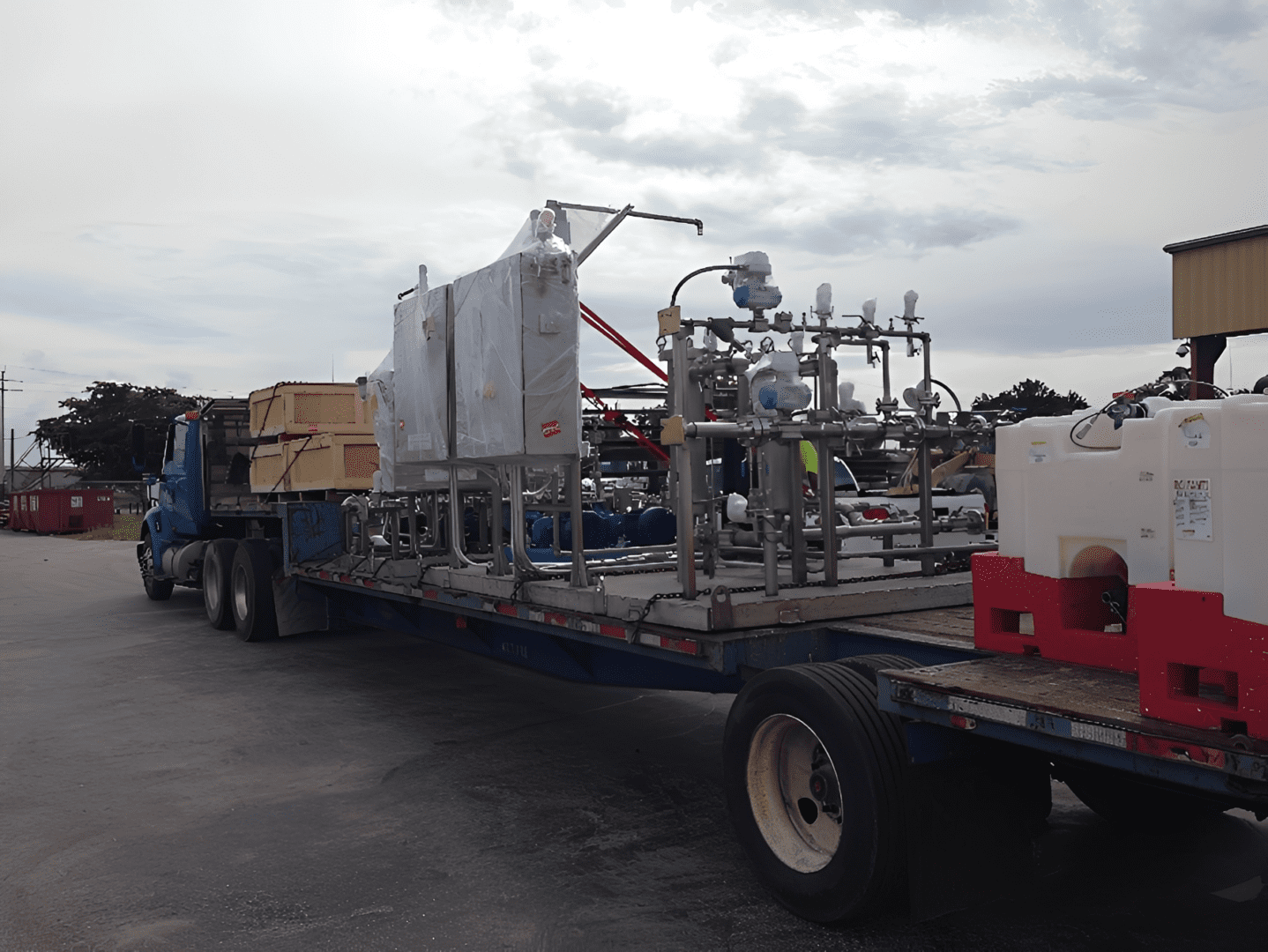
OSHA 1910.111 vs. ANSI/IIAR: Navigating 2026 Ammonia Safety Standards
For facility managers and lead engineers, the regulatory landscape governing ammonia isn’t just a matter of “checking a box”—it is a critical intersection of operational uptime and personnel safety. When handling anhydrous ammonia and ammonium hydroxide, the two primary authorities you must answer to are OSHA 1910.111 and the ANSI/IIAR (International Institute of Ammonia Refrigeration) standards.
While they share the same goal of preventing catastrophic releases, their requirements often overlap or, in some cases, differ in specificity. With over 29 years of experience in ammonia system integration, we’ve seen how confusion between these two standards can lead to costly delays during inspections or, worse, safety vulnerabilities in your vaporizer skids and storage systems.
Understanding the Functional Difference
The first step in compliance is recognizing that OSHA 1910.111 is the federal law, whereas IIAR provides the Recognized and Generally Accepted Good Engineering Practices (RAGAGEP).
OSHA 1910.111 focuses heavily on the “Storage and Handling of Anhydrous Ammonia.” It sets the legal baseline for equipment design, pressure vessel requirements, and the location of storage tanks relative to property lines and neighboring buildings. If you are operating a facility with bulk storage, OSHA is your primary legal auditor.
ANSI/IIAR Standards, however, are much more prescriptive regarding the technical lifecycle of the system. While originally focused on refrigeration, IIAR 2 and the newer IIAR 6 standards have become the gold standard for all ammonia-related piping, valve maintenance, and system testing. In the eyes of an OSHA inspector, if you are following IIAR standards, you are likely meeting (or exceeding) the federal “General Duty Clause.”
Equipment Requirements for Vaporizer Skids & Pressure Vessels
When moving from general standards to the physical fabrication of an anhydrous ammonia vaporizer skid, the requirements become highly prescriptive. Failure to adhere to these specifications doesn’t just risk an OSHA citation; it risks the mechanical integrity of your entire process.
1. Pressure Vessel Design & ASME Certification
Under OSHA 1910.111(b)(2), all containers and pressure vessels used for anhydrous ammonia must be constructed and tested in accordance with the ASME Boiler and Pressure Vessel Code, Section VIII.
- Stress Relieving: Containers must be stress-relieved after fabrication. This is a critical step to prevent stress-corrosion cracking, a common failure point in ammonia service.
- Joint Efficiency: OSHA mandates a basic joint efficiency of at least 80%.
- Material Compatibility: Because ammonia is highly corrosive to copper, zinc, and their alloys, all vessels, valves, and piping must be made of compatible materials, typically carbon steel or stainless steel. Note that galvanized steel is prohibited due to its zinc content.
2. Vaporizer Skid Specifics: Piping & Appurtenances
A “skid” is more than just a pump and a tank; it is a system of integrated appurtenances that must meet specific safety thresholds:
- Pressure Gauges: Every storage container and vaporizer must have a pressure gauge graduated from 0 to 400 psig. Under OSHA standards, these must be explicitly designed for ammonia service.
- Safety Relief Valves (SRVs): These must be installed in the vapor space of the vessel and discharged to a safe location (often a flare or an atmospheric vent at a safe height). Per IIAR 6, these valves have a strict 5-year replacement or re-certification window.
- Liquid Level Gauging: Fixed-tube or magnetic gauges are preferred. Sight glasses, if used, must be of the high-pressure “reflex” type and protected by heavy-duty shielding.
3. Maintenance & The “5-Year Rule”
One of the most significant updates in the industry is ANSI/IIAR 9-2020, which requires facilities to conduct an initial safety evaluation of their existing systems by January 1, 2026. If your vaporizer skids were built to older codes, they must be evaluated against these current “minimum safety requirements” to ensure they meet modern RAGAGEP (Recognized and Generally Accepted Good Engineering Practices).
This includes verifying that your ammonia detection alarms activate at concentrations no higher than 50 ppm and that your machinery rooms have adequate emergency ventilation.
Common Audit Red Flags: Top 3 Targets for Ammonia Inspections
After nearly 30 years of designing and maintaining these systems, we’ve noticed a pattern: inspectors don’t always start with the most complex engineering math. Instead, they look for “visible indicators” of your safety culture. If these three areas are neglected, it often triggers a much deeper, more invasive audit of your entire Process Safety Management (PSM) program.
1. Outdated or Uncertified Pressure Relief Valves (PRVs)
The PRV is the last line of defense for your anhydrous ammonia vaporizer. Under ANSI/IIAR 6, pressure relief valves must be replaced or bench-tested every five years.
- The Red Flag: An inspector will look at the stainless steel tag on the valve. If the date is over five years old, or if the lead wire seal is broken, it is an immediate citation.
- The Fix: Maintain a “Valve Schedule” in your maintenance logs and ensure every valve on your skid has a clearly legible, current certification tag.
2. Improper Piping Identification and Flow Direction
It sounds simple, but labeling is a major point of contention during OSHA and EPA site visits.
- The Red Flag: Piping that is missing labels, or labels that don’t specify the physical state (e.g., “Liquid” vs. “Vapor”). In a high-stress emergency, a first responder needs to know exactly what is in that pipe.
- The Fix: Follow the IIAR Color Coding Scheme (typically orange for anhydrous ammonia). Labels should be placed at every valve, every wall penetration, and every 20 feet of straight pipe run, clearly indicating the chemical name and flow direction.
3. Corroded Support Structures and “Hidden” Rust
Because ammonium hydroxide and anhydrous ammonia are often used in industrial environments with high humidity or chemical washdowns, corrosion is a constant threat.
- The Red Flag: “Pitting” corrosion on the vessel legs or the skid frame itself. Inspectors are particularly wary of “corrosion under insulation” (CUI). If they see bubbling or rust streaks coming from beneath the insulation on a cold-service pipe, they may require you to strip the insulation for a full non-destructive testing (NDT) thickness check.
- The Fix: Implement a monthly “Walk-Down” inspection. Clean and paint any surface rust immediately and ensure your skid’s structural supports are clear of standing water or debris.
Conclusion: Engineering Safety into Every Skid
Compliance isn’t about passing a one-time test; it’s about the mechanical integrity of your facility. Whether you are managing urea injection systems or a massive ammonia storage tank, staying ahead of these “red flags” ensures your 2026 operations remain both safe and profitable.
R. M. Technologies is acknowledged for quality products and service. Our extensive engineering expertise with ammonia, combined with our product knowledge and highly trained personnel, provides you with the convenience of dealing with one company for all your ammonia project requirements.
For additional information or specific application, please contact RM Technologies of America at: (800) 775-4280 or sales@rmtech.net
